The browser you are using is not supported. Please consider using a modern browser.

Webinar
ON DEMAND: The Fraud Threat Facing Community Banks and What Data Can Do About It
Recorded on April 30, 2026
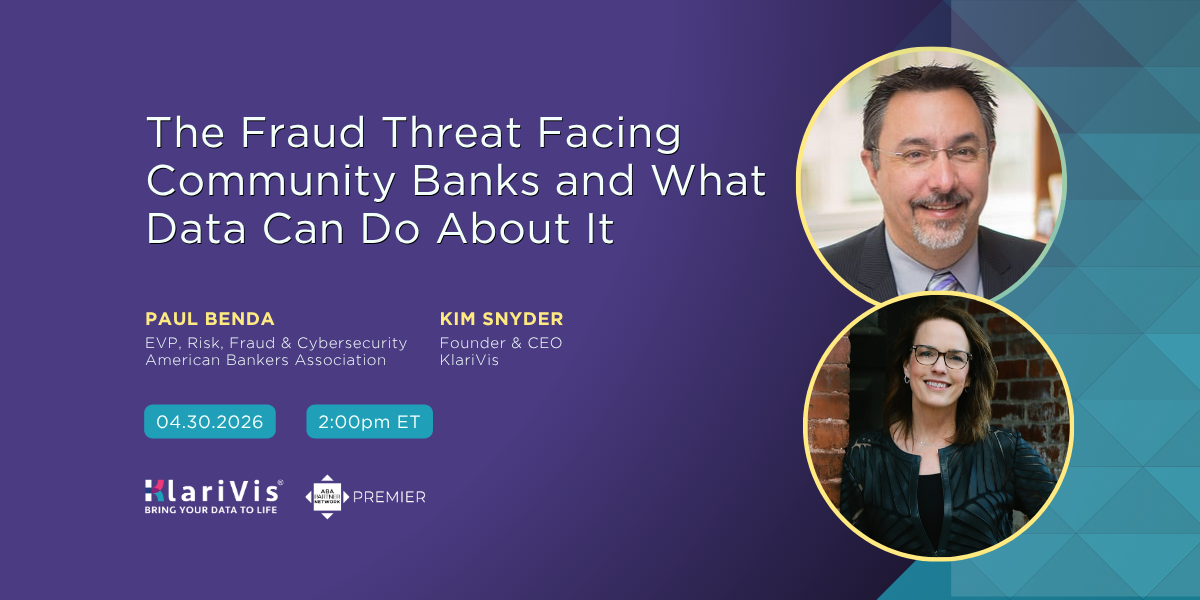
On April 30, 2026 KlariVis hosted a live webinar conversation between Kim Snyder, our founder and CEO, and Paul Benda, EVP of Risk, Fraud & Cybersecurity at the American Bankers Association. Paul is one of the foremost voices on fraud and scam prevention in the country, and what he shared left our audience with a lot to think about.
Here is a quick look at the ground we covered.
The Scale of the Problem
The FBI’s Internet Crime Complaint Center reported $20.9 billion in fraud losses in 2025, a 26% increase from the year before. The FTC estimates actual losses could be as high as $195 billion when accounting for underreporting. The average loss per victim is $20,000, and older customers are disproportionately targeted, not because they are more vulnerable, but because they tend to have more money.
How Criminals Build Trust
Across ten different scam types, 75 to 80% of victims were compromised through trust, not fear or financial promises. Criminals access stolen personal data, spoof caller IDs, and impersonate bank employees with uncanny accuracy. When someone receives a call that shows their bank’s name, knows their address, and cites the last four digits of their Social Security number, most people are going to assume it is legitimate.
The Telecom Problem
Standing up a shell telecom company costs as little as $600. Once registered with the FCC, these bad actors can inject hundreds of millions of robocalls into the system, and when they get shut down, they simply register a new one. ABA recently submitted data to the FCC that helped trigger a notice of proposed rulemaking requiring downstream telecom providers to verify who they are accepting calls from. That is a meaningful step forward.
Social Media Is Not Off the Hook
Meta reportedly earns approximately $16 billion per year in revenue from scam ads, according to internal documents obtained by Reuters. The company can take 8 to 32 complaints before removing a scam ad, while simultaneously shutting down a community bank’s Facebook page within hours for using the word ‘scam’ in an educational post. The contrast is striking.
Crypto ATMs Are a Fraud Vector
These machines charge 20 to 30% transaction fees and have been shown, in at least one court case, to process 93% fraudulent transactions. The average victim age in that case was 71, and the average loss was $8,000. Tennessee recently became the second state to ban them.
AI Voice Cloning Is Here
Paul demonstrated live how ElevenLabs can clone a voice in under five minutes using publicly available audio. He cloned his own voice, his CEO’s voice, and his daughter Quinn’s voice to simulate a grandparent scam call, complete with background police station audio. The demo was eye-opening, and the honest truth is that the technology is now accessible to anyone.
What Is Actually Working
Australia is the only major jurisdiction seeing a meaningful reduction in fraud losses, and it comes down to a whole-of-ecosystem approach. Banks, telecoms, social media platforms, and government agencies are all required to participate and share data through a national anti-scam center. The US is not there yet, but Paul and ABA are pushing hard toward that model.
What Banks Can Do Right Now
Paul’s advice was clear: fraud cannot be siloed. Your fraud team, your cyber team, and your frontline staff all need to be working from the same picture. Monitoring transaction data with age-based filters, watching for micro-deposits that signal new payee setup, and proactively calling customers when something looks off are all practices our community bank clients are already building into their daily routines.